Protect the Tees: Challenge the Licence
Protect the Tees: Challenge the Licence

Latest: March 19, 2026
BBC North East Cover JR Win - 19th March
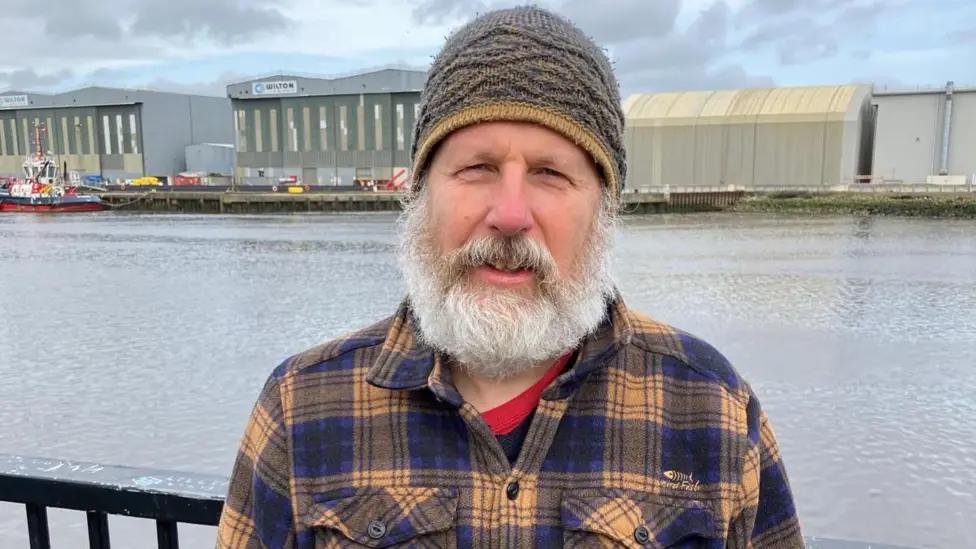
The BBC Interviewed me and Paul Brooks, PD Ports Harbour Master, under the Transporter Bridge by the Harbour Master's office on Monday and are now talking about the JR on radio, tv and website.
BBC Ne…
Read moreThe Environmental Crisis on our Coast
The River Tees and the surrounding coastline are in crisis. In 2021, our communities witnessed a catastrophic mass die-off of crustaceans along the Tees Valley and North Yorkshire coasts. We are watching harbour seal pups dying, with evidence pointing to contamination by PCBs.
Despite these warning signs, the Marine Management Organisation (MMO) has granted a massive new 10-year licence for maintenance dredging of the River Tees and Hartlepool.
I believe this decision is not only dangerous but unlawful. I am taking legal action to overturn this licence and demand the safety of our marine life.
I am supported by the North East Fishing Collective who have been campaigning to not only protect their way of life but also our marine environment.
The Legal Case: A Failure to Test
The heart of the legal challenge is simple: The MMO has failed to follow the legislated safety rules.
To dump dredged material at sea, you must prove it is safe. This is governed by the OSPAR Convention. The MMO claims to follow OSPAR Guidelines, but the numbers tell a different story.
The OSPAR Guidelines require 835 samples to test the 1,660 hectares covered by this licence. The MMO granted the licence based on just 31 samples.
By taking only 3.7% of the required samples, the MMO is effectively dredging blind. They cannot possibly know what they are digging up and dumping into our seas.
What are they digging up?
The River Tees has an industrial history of over 150years, steel making, ship building, chemical manufacture, oil refining.... This has left us with a legacy of contamination held within the river sediments. Without rigorous sampling, we risk disturbing and spreading a toxic cocktail of chemicals, including:
PAHs (polycyclic aromatic hydrocarbons)
PCBs (polychlorinated biphenyls) and PBDEs (polybrominated diphenyl ethers)
Trace metals from historical mining and OCs (organochlorines).
I know these toxins are there, from the limited sampling carried out. The MMO bans certain areas from being dredged due to contamination. Yet, without the correct density of sampling, safe sediment cannot be distinguished from toxic sediment.
With the correct sampling, dredging could be safely directed. Instead, the current licence risks poisoning the very ecosystem we are trying to protect.
The Goal
I am not trying to shut down the river. I understand that maintenance dredging is necessary for the port. However, it must be done safely and legally.
I am raising funds to launch a legal challenge against the legality of the licence issued by the MMO. The goal is to force the regulators to:
Adhere to OSPAR sampling guidelines (taking the required 835 samples, not 31).
Identify contamination hotspots accurately.
Ensure only safe sediment is disposed of at sea.
Why I need your help
Legal challenges against government bodies are expensive, but the cost of inaction is far higher. If this 10-year licence stands, we risk a decade of toxic dispersal that could irreversibly damage the marine environment of the Tees Estuary and the North Sea.
Please donate to help me hold the regulators to account and protect our seals, our sea life, and our coast.
Learn More
About the OSPAR Convention and OSPAR Agreement 2014-06 which govern disposal in the North Sea, you can read my explanation here - Sediment Sampling Guidelines.
About contamination in the River Tees, I have documented many of my analyses on northeastfc.uk, along with recordings of two presentations I have given and links to other presentations on the 2021 crab die-off.

Dr Simon Gibbon
March 19, 2026
BBC North East Cover JR Win - 19th March
The BBC Interviewed me and Paul Brooks, PD Ports Harbour Master, under the Transporter Bridge by the Harbour Master's office on Monday and are now talking about the JR on radio, tv and website.
BBC News Story - https://www.bbc.co.uk/news/articles/cn5g56yke7yo
BBC Lunchtime News - https://www.bbc.co.uk/iplayer/episode/m002svyr/look-north-north-east-and-cumbria-lunchtime-news-19032026
It will also be on the 6.30pm Look North (19/3/2026)
Great to get the coverage for this significant step on the journey to make the River Tees a thriving environment.
Dredging is essential for the economy of Teesside, but the dredging can be done in a way which makes the River Tees a thriving environment for marine life.
So, we will be spending the 12 month redetermination period making sure that as much evidence is presented to make the licence as safe as possible. We have also reached out to the MMO and PD Ports to see if we can find a collaborative way to design a better way of dredging the Tees.
However, if it turns out that we can't reach an agreement on improving the licence sufficiently, then I may have to launch another judicial review to challenge a new licence which repeated the faults of the quashed licence.
Thank you very much for your support, this wouldn't have been possible without your generous donations, I will keep updating via this platform (and on https://northeastfc.uk), but hope not to have to come back to seek more funds for more legal work.
Best wishes, Simon Gibbon
simonrg@northeast
Dr Simon Gibbon
March 3, 2026
Tees Dredging Licence Quashed
Thanks to all your generous donations we won.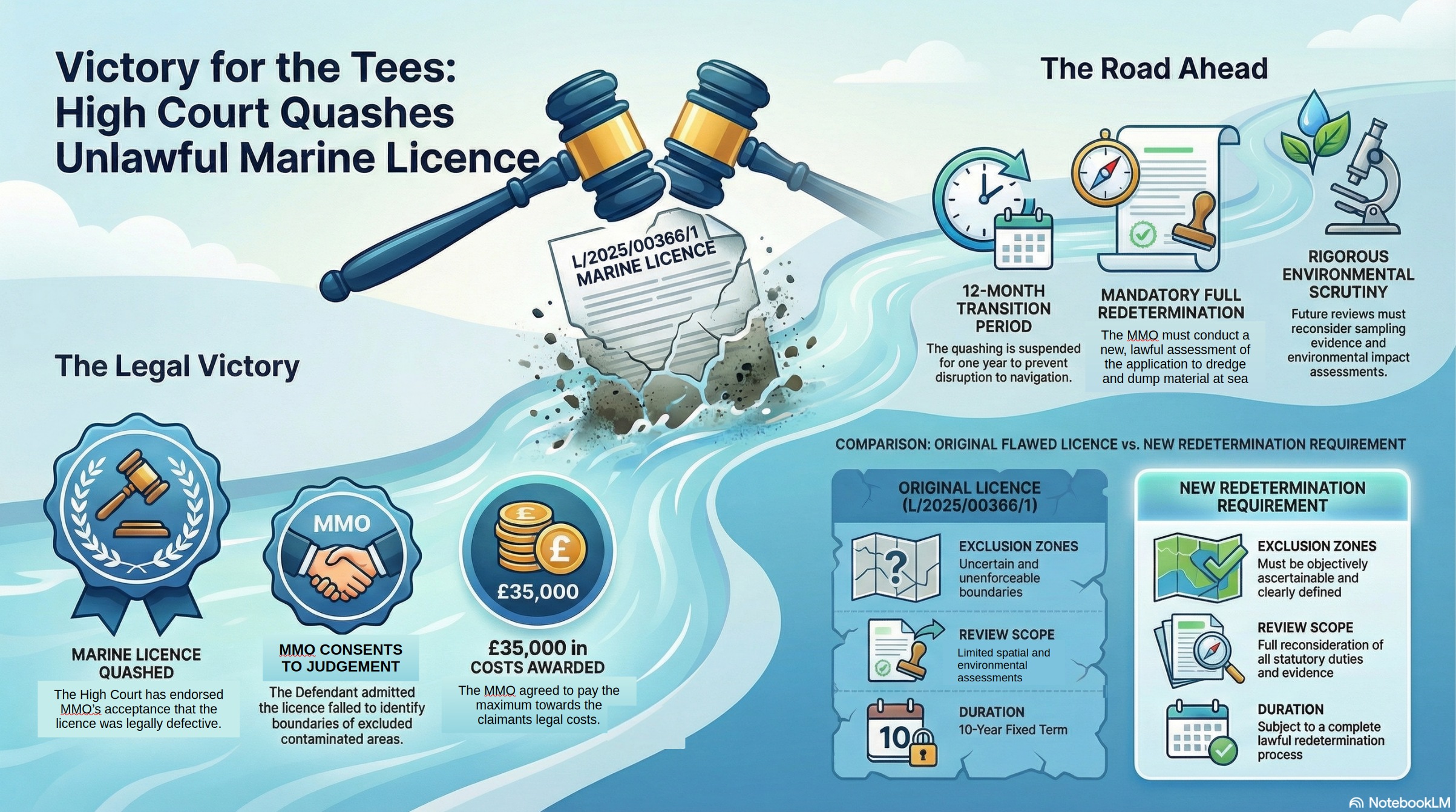 We won our Judicial Review with the MMO quashing their defective, unenforceable licence. While the MMO refused to admit their sediment sampling was flawed, we have forced them into a 12-month 'full reconsideration' of the application. This resets the clock. It means the vital evidence gathered regarding seal pup mortality and toxic hotspots must now be put back on their desk. We will use this 12-month window to hold their feet to the fire and demand they follow the science, and we are fully prepared to take them back to court if they fail to do so.
I will update https://northeastfc.uk with more information and as the year progresses you will be reading about other activities underway to make the River Tees more environmentally friendly.
Best wishes, Simon Gibbon
https://northeastfc.uk
Dr Simon Gibbon
Dec. 29, 2025
MMO Responded on Christmas Eve - Will Fully Defend
Thank you for your support.
I hope you had a Merry Christmas and will have a Happy New Year.
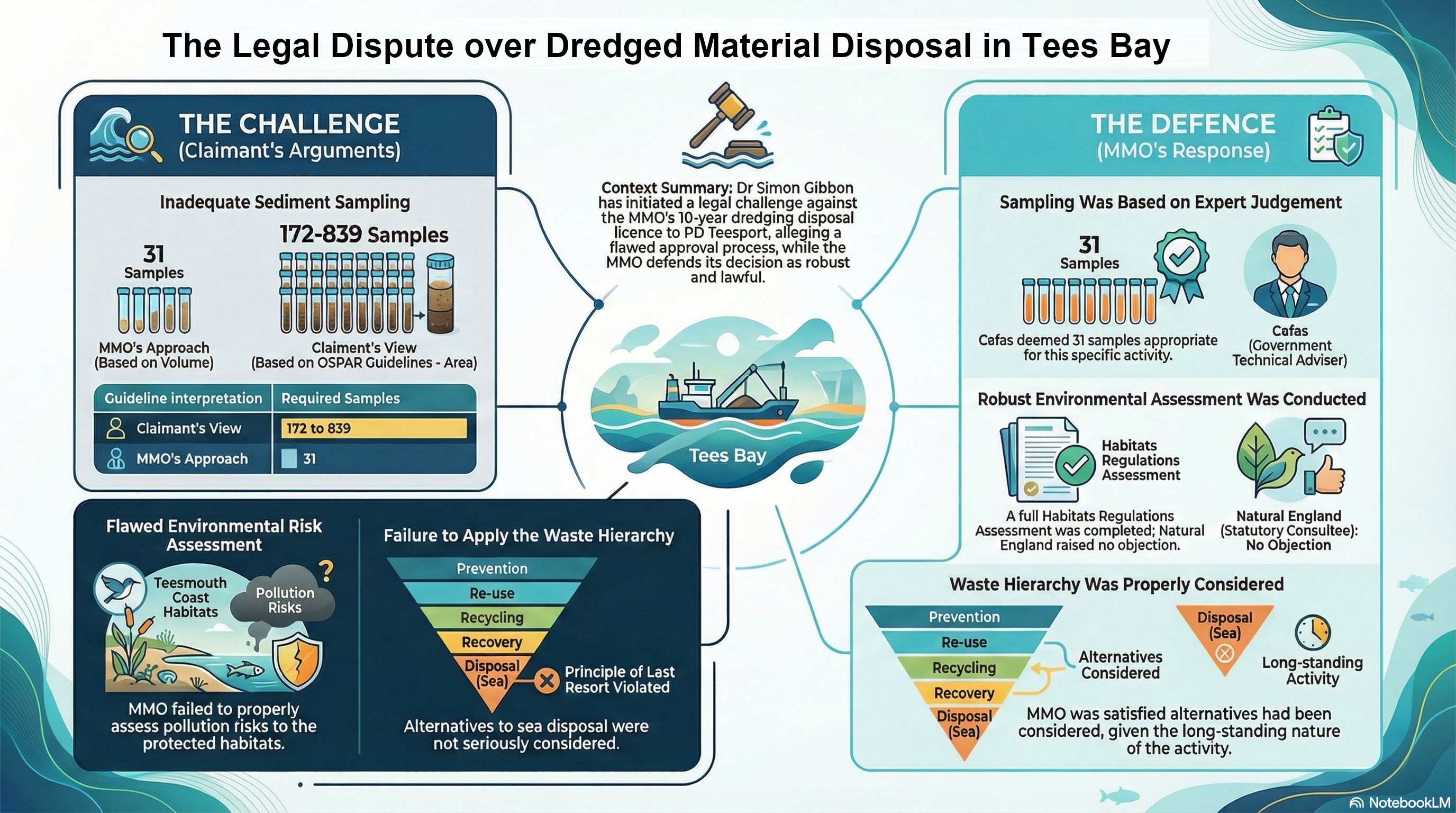
I am writing to provide an important update regarding our legal challenge against the Marine Management Organisation (MMO) and its decision to grant a new 10-year licence for the disposal of dredged material at the Tees Bay A site.
Please let your friends know about our challenge and how they can help to support our legal efforts.
__________________________________________
It would be fantastic if you could spread the word:
- Email five of your friends asking them to pledge to this case (email template below)
- Post a link to Facebook asking your friends to pledge
- Blog / LinkedIn / Tweet / etc. in support on which ever platform you use
- And of course please pledge again if you are able
Thank you once again, Simon Gibbon
Please share my post on Facebook (https://www.facebook.com/groups/reclaimoursea/posts/1346178660582367/), or on LInkedIn (https://www.linkedin.com/posts/simongibbon_environment-science-teesvalley-activity-7406509324530823168-Gmct) or Twitter (https://x.com/simonrg/status/2001452565058224551) or even an email:
__________________________________________
I am writing to you today to ask for your urgent support for a legal challenge Simon Gibbon has launched to protect the River Tees and the Teesmouth and Cleveland Coast from potentially harmful dredge disposal.
Simon is very passionate about the damage being done to his local marine environment. He has spent a significant amount of time trying to understand the root of the issue, and recently, he found the "smoking gun."
His background in industrial chemistry, meant that the sampling of the materials being dredged never made sense to him. It seemed physically incapable of properly characterizing what was being dumped at sea. Whenever he raised this with the Marine Management Organisation (MMO), they insisted they were following OSPAR guidelines (the international convention protecting the North East Atlantic).
Finally, late one evening in November, he re-read the OSPAR guidelines side-by-side with the MMO’s statement. That is when he saw it.
The MMO was relying on a subtle but critical misreading of the guidelines. The guidelines state that you must first sample enough surface area to capture variations in contamination (since different activities happen in different places along a river). The MMO, however, calculated the number of samples based only on total volume.
In the case of the Tees, this mathematical error means just one sample is taken for every 55 football pitches of the riverbed. Instead of OSPAR's still large area of 1 sample for every 2 football pitches. OSPAR is pragmatic as not prohibitive to dredging, but sufficient to provide protection to the marine environment by finding contamination hotspots and thus adhering to the precautionary principles of the OSPAR and London Conventions on dumping at sea.
He is launching this Legal Challenge Because representations to the MMO failed to fix this. On 5th November 2025, the MMO granted a licence to PD Teesport Ltd to dispose of dredged material for the next 10 years (until 2035).
So now is a critical, once-in-a-decade opportunity to improve the protection of the Tees marine environment. If we do not act now, this flawed sampling method will dictate the safety of these waters for the next ten years.
He is arguing that the licence was granted unlawfully based on:
1/ Inadequate Sampling: The MMO requested only 31 samples. A correct application of OSPAR guidelines requires between 322 and 614 samples. The current data is scientifically insufficient to detect known pollutants like PAHs and PCBs.
2/ Environmental Risk: The disposal site is near the Teesmouth and Cleveland Coast Special Protection Area (SPA). There is reasonable suspicion that contaminants have already contributed to seal-pup deaths in the area.
3/ Failure of Process: The application failed to seriously consider alternatives to sea disposal, which is a legal requirement under the waste hierarchy.
He is not trying to stop necessary dredging. He is asking the court for a suspended quashing order. This would require proper sampling and a lawful application of the waste hierarchy, allowing the MMO to re-determine the licence based on sound evidence, not guesswork.
The MMO has responded to his pre-action protocol letter saying that the claim "will be defended in full", so once the MMO's response has been fully evaluated it is likely that he will have to initiate a claim for Judicial Review.
How You Can Help To fight this case, he needs financial support to cover legal expenses. He is raising funds through CrowdJustice.
https://www.crowdjustice.com/case/protect-the-tees/
He needs to reach the following targets in three stages:
- £8,000 (Urgent): To cover costs already incurred in identifying the grounds and writing the Judicial Review Pre-Action Protocol letter.
- a further £9,000 (By Jan 10th): We have a strict deadline. The MMO should have responded to the PAP letter 24th December. As they have not agreed to defer the licence, he must file for judicial review by 12th January (promptly post-decision). This funds the creation of the evidence bundle.
- a further £16,000 (Estimated): Required if the judicial review is granted, to cover the hearing and judgment.
Any contribution you can make will help ensure that the decision to dispose of potentially contaminated sediment near protected marine areas is properly scrutinised.
He will be updating regularly on CrowdJustice to let his supporters know what is happening. The next major update will be once the legal team have been able to fully consider the MMO's formal response in early January.
Thank you so much for reading this and for considering his request.
Dr Simon Gibbon
Dec. 22, 2025
Please Tell Your Friends & MMO Delayed Response to PAP Letter
I hope you are doing well and having or will have a Merry Christmas and a Happy New Year.
The MMO have asked for more time to respond to my Pre-action Protocol letter. We have agreed to this on the basis that as long as we file by mid-January the MMO will not attempt to have the request dismissed on the grounds of lack of promptness.
While we could have filed anyway, I really want to understand why the MMO disagree with the grounds for stating the licence is illegal and there is information which we have requested from the MMO as part of the PAP letter which is needed to make a strong case to allow the judicial review to go ahead.
In the meantime any help getting the message out would be very helpful.
Please share my post on Facebook (https://www.facebook.com/groups/reclaimoursea/posts/1346178660582367/), or on LInkedIn (https://www.linkedin.com/posts/simongibbon_environment-science-teesvalley-activity-7406509324530823168-Gmct) or Twitter (https://x.com/simonrg/status/2001452565058224551) or even a short email:
__________________________________________
Suggested email, please edit and send to anyone you think may be interested / able to support the legal expenses.
I am writing to you today to ask for your urgent support for a legal challenge Simon Gibbon has launched to protect the River Tees and the Teesmouth and Cleveland Coast from potentially harmful dredge disposal.
Simon is very passionate about the damage being done to his local marine environment. He has spent a significant amount of time trying to understand the root of the issue, and recently, he found the "smoking gun."
His background in industrial chemistry, meant that the sampling of the materials being dredged never made sense to him. It seemed physically incapable of properly characterizing what was being dumped at sea. Whenever he raised this with the Marine Management Organisation (MMO), they insisted they were following OSPAR guidelines (the international convention protecting the North East Atlantic).
Finally, late one evening in November, he re-read the OSPAR guidelines side-by-side with the MMO’s statement. That is when he saw it.
The MMO was relying on a subtle but critical misreading of the guidelines. The guidelines state that you must first sample enough surface area to capture variations in contamination (since different activities happen in different places along a river). The MMO, however, calculated the number of samples based only on total volume.
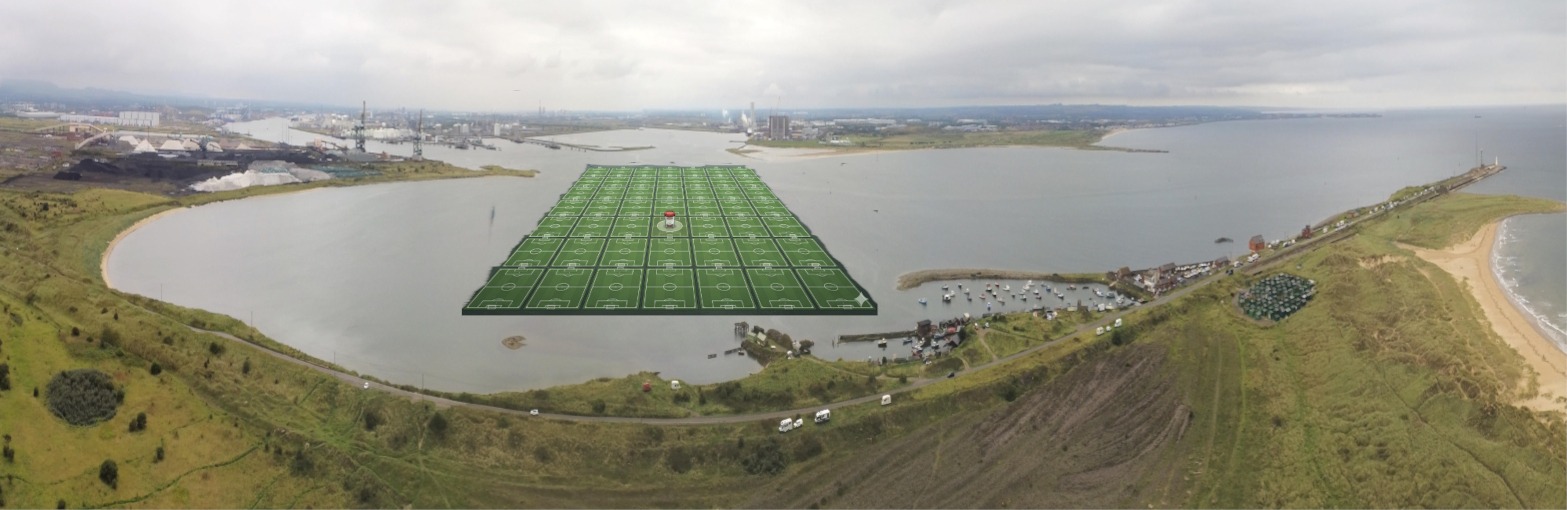
In the case of the Tees, this mathematical error means just one sample is taken for every 55 football pitches of the riverbed. Instead of OSPAR's still large area of 1 sample for every 2 football pitches. OSPAR is pragmatic as not prohibitive to dredging, but sufficient to provide protection to the marine environment by finding contamination hotspots and thus adhering to the precautionary principles of the OSPAR and London Conventions on dumping at sea.
He is launching this Legal Challenge Because representations to the MMO failed to fix this, he will initiate a claim for Judicial Review. On 5 November 2025, the MMO granted a licence to PD Teesport Ltd to dispose of dredged material for the next 10 years (until 2035).
This is a critical, once-in-a-decade opportunity. If we do not act now, this flawed sampling method will dictate the safety of these waters for the next ten years.
He is arguing that the licence was granted unlawfully based on:
1/ Inadequate Sampling: The MMO requested only 31 samples. A correct application of OSPAR guidelines requires between 322 and 614 samples. The current data is scientifically insufficient to detect known pollutants like PAHs and PCBs.
2/ Environmental Risk: The disposal site is near the Teesmouth and Cleveland Coast Special Protection Area (SPA). There is reasonable suspicion that contaminants have already contributed to seal-pup deaths in the area.
3/ Failure of Process: The application failed to seriously consider alternatives to sea disposal, which is a legal requirement under the waste hierarchy.
He is not trying to stop necessary dredging. He is asking the court for a suspended quashing order. This would require proper sampling and a lawful application of the waste hierarchy, allowing the MMO to re-determine the licence based on sound evidence, not guesswork.
How You Can Help To fight this case, he needs financial support to cover legal expenses. His raising funds through CrowdJustice.
https://www.crowdjustice.com/case/protect-the-tees/
He needs to reach the following targets in three stages:
£8,000 (Urgent): To cover costs already incurred in identifying the grounds and writing the Judicial Review Pre-Action Protocol letter.
a further £9,000 (By Jan 10th): We have a strict deadline. The MMO should have responded to the PAP letter by 18th December but have requested until the New Year. If they do not agree to defer the licence, He must file for judicial review by 12th January (promptly post-decision). This funds the creation of the evidence bundle.
a further £16,000 (Estimated): Required if the judicial review is granted, to cover the hearing and judgment.
Any contribution you can make will help ensure that the decision to dispose of potentially contaminated sediment near protected marine areas is properly scrutinised.
He will be updating regularly on CrowdJustice to let his supporters know what is happening. The next major update will be once his solicitor has received the MMO's formal response in early January.
Thank you so much for reading this and for considering his request.
Dr Simon Gibbon
Dec. 6, 2025
Pre-action Protocol Letter Sent to MMO
Thank you very much for to all those who have donated to support my legal action to protect the River Tees. I am very gratefully to have got over the £1000 mark, feels like the journey has begun.
The legal team and I have worked up what we believe is a strong pre-action protocol letter (PAP). Before you can ask for Judicial Review you have to send a PAP letter to the organisation whose decision you are asking to be reviewed, in this case the MMO, to tell them what you asking to be reviewed and the reasons why you are asking for a review. The idea is that this gives a chance to avoid the need for a judicial review, if the MMO point out that my action is fatally flawed or they accept my action is correct or we can come to a negotiated agreement. I am not asking for dredging to stop immediately rather that any quashing of the licence is deferred for 9 months to allow the MMO to regrant a licence after correct sampling has been carried out.
In the PAP letter we lay out the 4 grounds why we believe the PAP letter should not have been granted:
- Dangerously inadequate sediment sampling: Far too few samples were taken to be able to fulfil the OSPAR requirement to have a full picture of contamination within the area being dredged.
- Failure to Protect Marine Water Quality: We argue the MMO failed to assess the impact of this disposal on the wider North Sea environment.
- Ignoring Alternatives to Sea Disposal: Basically rather than disposing the Port should have seriously assessed the possibilities of reusing or recycling the dredged material in some way and we can not find evidence that alternative to dumping were taken seriously. If this is the case then the MMO unlawfully accepted this without sufficient evidence that alternatives to dumping has been considered.
- Risk to Protected Habitats: The disposal site lies very close to the Teesmouth and Cleveland Coast Special Protection Area (SPA) and SSSI—sites legally protected for their bird populations and wetlands. The Port’s own modelling shows sediment plumes drifting into or very close to these protected zones. We argue the MMO failed to carry out a lawful "Appropriate Assessment" under the Habitats Regulations to ensure these fragile ecosystems would not be harmed by toxic pollutants.
We expect a reply from the MMO on 18th December, as the process gives them 14 days to respond then we only have a couple of days to ask for a judicial review as we need to do this "promptly" (6-7weeks) after the licence was granted on 5th November. In the meantime we are working up the judicial review form and evidence documents that we will need if we proceed with a judicial review.
The diagram shows how just taking 1 sample is ok if there is no contamination and everything is the same, but for the Tees with contamination is likely to be miss the hotspots of contamination:
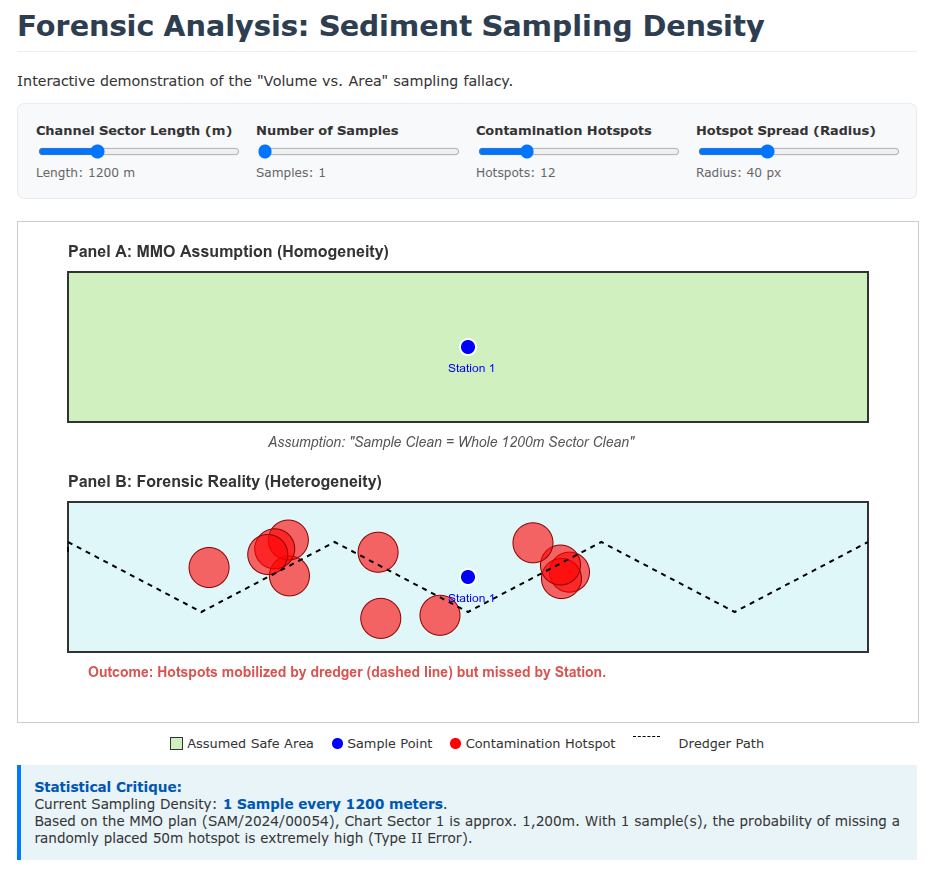
This is just a model, but we know the Tees is like this due to the different industries there have been over the last 150 years and the local exclusions to dredging that are in the licence. To be able to avoid dredging highly contaminated areas, we have to know where they are and so need far more sampling to find these hotspots. Web page with Needle in a Haystack model.
Once again thank you all for your support, this legal action may not be directly taking pollution out of our waters, but if successful it will. Success will mean that directly less contamination (PAHs, PCBs, PDBE, etc.) will end up in the Tees Bay and that future assessments will better follow the precautionary approach that the UK has agreed to as a signatory of the London Convention / London Protocol and the OSPAR Convention.
It would be fantastic if you could spread the word:
- Email five of your friends asking them to pledge to this case
- Post a link to Facebook asking your friends to pledge
- Blog / Tweet in support on which ever platform you use
- And of course please pledge again if you are able
Thank you very much, Simon Gibbon
Recent contributions