Silenced in the NHS: One Woman’s Fight Against Abuse & Misused Funds
Silenced in the NHS: One Woman’s Fight Against Abuse & Misused Funds

Quick Read – 2 Minutes
See why this case matters and how your support makes a difference.
When a Woman in the NHS Speaks Up — Who Does the System Protect?
I have worked in the NHS for nearly 18 years — as both a clinician and senior manager. I believed in patient safety. I believed in public service. I believed that if something was wrong, the NHS would want to know.
I was wrong.
After raising concerns about harassment and abuse by senior male managers — along with discrimination, safeguarding failures, and governance issues — I became involved in prolonged legal proceedings. The Trust also initiated disciplinary action against me, threatening my career, professional reputation, and livelihood.
Violence Against Women — Inside the NHS
Women make up 75% of the NHS workforce. If the NHS cannot protect its own female staff from harassment by senior men, what message does that send? When abuse is tolerated, it stops being individual misconduct — it becomes institutional. Silence becomes policy.
The 2015 Freedom to Speak Up report warned that staff who raise concerns often face retaliation. More than a decade later, the culture of fear persists.
Public Money and Accountability
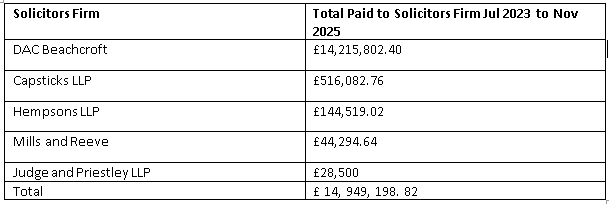
Between July 2023 and November 2025, the Trust reported almost £15 million in total legal spending over £25,000 per month. Over £14 million went to a single law firm.
Part of this taxpayer-funded budget — the precise amount unknown — has been used in the litigation against me, including defending senior individuals I am suing personally. These decisions were approved by executives with fiduciary responsibility, raising serious questions about conflicts of interest and whether public money is being spent in the public interest.
Inequality of Arms
The Trust has institutional funding and specialist legal teams. I:
- Have not been paid for 18 months
- Represented myself for over two years
- Face legal costs that could exceed £250,000
Without public support, I cannot continue. With funding, the evidence can be tested properly before an independent Tribunal.
We must raise £10,000 by 20th March 2026 to cover preliminary hearing and preparation costs.
This Is Bigger Than Me
This case will generate evidence to support reform, protect future whistleblowers, and challenge systemic harassment, organisational abuse and misuse of public funds in the NHS.
No donation is too small. Every pound helps reduce the imbalance, shine light on abuse, and demand accountability.
A safer NHS for women is a safer NHS for everyone. Please support this case — because accountability only exists when the public refuses to stay silent.
In-Depth Read – 10–12 Minutes
Full story, evidence, and wider implications for the NHS and whistleblowers.
A Whistleblower’s Fight for Accountability, Justice, and a Better NHS
For almost 18 years, I have dedicated my career to the NHS. I have served as both a clinician and a senior manager. I believed in the values of public service, patient safety, and integrity. I believed that if something went wrong, the NHS would want to know — and would act.
That belief has cost me my health, my livelihood, and my future.
I am currently employed by University College London Hospitals NHS Foundation Trust (UCLH). I am also an NHS whistleblower. For legal reasons, I cannot publicly disclose my identity, but the CrowdJustice team has verified who I am and the authenticity of my case.
What has happened to me is not an isolated dispute or a personal grievance. It is part of a much wider and deeply troubling pattern inside the NHS — one that has been documented repeatedly, debated in Parliament, and yet allowed to continue.³
This case is about how public money is being used to silence whistleblowers, how senior officials avoid accountability, and how a culture of fear, retaliation, harassment and abuse — particularly against women — continues to harm staff, patients, and taxpayers alike.
Violence, Harassment and Organisational Abuse of Women in the NHS
I have suffered harassment and abuse from senior male managers, including individuals at Director level, employed by my NHS Trust.
Despite raising these concerns through safeguarding routes, to Directors, Executive Directors, and ultimately to Board level, the harassment and abuse were not stopped. Instead, they were allowed to continue.
The failure of safeguarding, senior leadership and the Board to intervene meant that what began as individual misconduct escalated into ongoing organisational abuse — where the institution itself became the mechanism through which harm was perpetuated.
When harassment and abuse are tolerated, minimised, or ignored by those in positions of authority, they cease to be isolated incidents. They become systemic.
This case therefore sits squarely within the national crisis of violence, harassment and abuse against women, including within workplaces — and within the NHS itself.
A National Emergency — and an NHS That Must Be Held to Account
On 21 February 2024, the UN Special Rapporteur on violence against women and girls urged the UK government to take urgent action to end all forms of violence against women and girls, after the issue was formally described as a “national threat.”
In December 2025, the Labour government published its landmark “Freedom from violence and abuse” cross-government strategy, committing to:
- halving violence against women and girls within a decade
- relentlessly pursuing perpetrators
- reforming institutional responses to abuse
The government has also appointed a new adviser to reform the NHS response to violence against women and girls.
This matters profoundly because the NHS is:
- the largest employer in the UK
- employing around 1.5 million people
- with women making up approximately 75% of the workforce
- and one of the largest employers of women globally
If the NHS cannot protect its own female staff from harassment, abuse and violence — particularly when perpetrated by senior male employees — then these national commitments risk becoming meaningless words rather than lived reality.
The Dark Side of the NHS: A Problem That Refuses to Go Away
In 2015, Sir Robert Francis QC published his landmark Freedom to Speak Up report. He warned that NHS staff were afraid to raise concerns, and that those who did often faced retaliation, isolation, and career destruction. He concluded with a stark warning: failure to speak up can cost lives.
Eleven years later, in 2026, little has changed.
Only 72% of NHS staff felt safe to raise concerns at the time of the report. Since then, numerous high-profile whistleblowing cases — including those of Dr Chris Day and Dr Max McClean — have exposed a consistent pattern:
- concerns ignored
- whistleblowers punished
- and vast sums of public money spent defending the indefensible
These cases reveal an NHS that too often prioritises institutional self-protection over truth, learning, safety — and the protection of women and marginalised staff.
My case follows this same disturbing pattern.
My Case: The NHS Trust’s Retaliation, Discrimination, Harassment and a Vexatious Defence
I am suing my NHS employer in the Employment Tribunal for:
- Pregnancy and maternity discrimination
- Sex discrimination
- Disability discrimination
- Harassment and victimisation
- Unlawful deduction of wages
- Unfavourable treatment
- Personal injury
Much of the evidence supporting these claims is documented in writing. Senior leaders at the Trust are fully aware of this.
Yet rather than address these issues lawfully and transparently — including the serious allegations of harassment and abuse by senior male managers — the Trust has chosen to defend the claim at all costs, using aggressive litigation tactics designed to:
- obscure the truth
- intimidate me
- exhaust me financially and emotionally
Since before I lodged my claim in February 2025, and continuing afterwards, senior figures — including Directors and Executive Directors — have engaged in conduct that I believe is unlawful, oppressive, and entirely against the public interest.
This includes advancing a defence that appears to have no reasonable prospect of success, while spending enormous sums of taxpayer money to do so.
This Is Not Just About Me: The Data Confirms the Pattern
The Trust’s own 2024/25 NHS Staff Survey reveals a deeply concerning picture:
- Women report worse experiences than men
- Disabled staff report worse experiences than non-disabled staff
- Ethnic minority staff are significantly more likely to face disciplinary action
- Staff report discrimination based on pregnancy, race, disability, accent, class and favouritism
- Free-text responses reveal widespread bullying and barriers to progression
Crucially, UCLH Workforce Race Equality Standard (WRES) and Workforce Disability Equality Standard (WDES) data show that:
- harassment and abuse have increased
- reports of bullying and abuse by the public, colleagues and managers have increased
- this deterioration affects both BME staff and disabled staff
These are not anecdotal complaints. They are measurable, worsening, systemic failures.
Yet Trust action plans continue to avoid one critical issue: the conduct and lack of accountability exemplified by those at the very top.
Whistleblowing at Board Level — and the Silence That Followed
In June 2025, I escalated my concerns to the Trust’s Non-Executive Directors and Staff Governors. I raised serious issues relating to Harassment, Organisational Abuse, Health and Safety breaches, Data Protection breaches, potential fraud, and the conduct of named Board members — public officials bound by the Nolan Principles of Public Life.
The response was silence.
Despite repeated correspondence, not one Non-Executive Director responded substantively. Requests to contact Patient and Public Governors were refused.
Instead, after blowing the whistle, I have become the subject of formal disciplinary investigation — while senior individuals accused of wrongdoing have not.
This inversion of accountability lies at the heart of this case.
The Cost to You, the Taxpayer – and Who Signed It Off
Between July 2023 and November 2025 — just 28 months — UCLH reported almost £15 million in legal expenditure above £25,000 per month.¹
Over £14 million went to a single law firm.¹
This is public money. Money intended for patient care.
Despite the overwhelming evidence against the Trust, it appears that the Chief Financial Officer and other individuals with fiduciary responsibility approved and signed off the use of significant sums of taxpayer money to defend this case.
Even more concerning is that the Trust chose to defend and legally finance several senior staff members whom I am also suing individually, despite:
- clear and ongoing conflicts of interest
- a serious risk of further conflicts arising
- and without first conducting any conclusive investigation into whether those individuals had breached:
- their contracts of employment
- the law
- or the Trust’s own policies
In effect, the Trust appears to have decided — without objective, full, fair or completed investigation — that it would fund the legal defence of senior individuals at public expense.
This decision:
- placed the interests of senior managers above the public interest
- compromised the integrity of any subsequent internal investigations
- ensured those individuals received ongoing legal advice and representation
- transferred personal legal risk onto the taxpayer
Such conduct raises serious public-law concerns and questions about compliance with basic principles of good governance, fiduciary duty, and accountability.
Inequality of Arms
While senior executives earning six-figure salaries receive taxpayer-funded legal representation:
- I have not been paid a salary for almost 18 months
- I self-represented for over two years
- I cannot continue without public support
An extreme imbalance of power, resources, and protection. This is the reality faced by NHS whistleblowers — particularly women who raise concerns about abuse by those in power.
A System That Rewards Litigation, Not Resolution
NHS Resolution provides statutory insurance for NHS Trusts to defend employment claims. In practice, this can operate like a blank cheque — with little scrutiny and significant conflicts of interest.
The Francis Report warned of a defensive, adversarial legal culture. That culture is now entrenched — focused on avoiding liability rather than serving the public interest.
Major Law firms representing NHS Trusts openly acknowledge that Public Sector work had “taken off” and litigation is their primary growth area. This creates powerful incentives to defend, delay, and exhaust — at any cost. ²
Intimidation, Retaliation, and Abuse of Power
Over the past 30 months, I allege that Trust staff have engaged in conduct designed to intimidate, discredit, and pressure me into silence. This includes:
- Refusal to disclose key documents and information
- Repeated data protection breaches and breaches of confidentiality
- Misuse of policies, changing goal posts and double standards
- Vexatious adult and child safeguarding referrals
- Character assassination
- Misuse of personal data
- Withholding pay as leverage
- Unlawful Surveillance and intrusive conduct
- Maintaining deliberate information imbalances
These actions have caused immense distress to me and my family and exemplify institutional retaliation and organisational abuse.
They also raise profound questions about governance, legality, and the abuse of public authority.
Why This Case Matters
This case is not only about justice for me.
It is about:
- exposing a tactical playbook that is used repeatedly against NHS staff that dare to speak up.
- exposing violence, harassment and abuse against women in the NHS
- exposing how public money is used to shield those in power
- understanding how whistleblowers are systematically silenced
- challenging a litigation culture that prioritises reputation over truth
- and pushing for meaningful reform that protects staff and patients
Parliament has debated this issue before. MPs have acknowledged the devastating impact on whistleblowers and the inequality of arms they face. ³
Yet the system continues largely unchanged.
Harassment, abuse and violence perpetrated by male staff against female staff in the NHS must stop.
How You Can Help
I am now represented by Rahman Lowe LLP. If this case proceeds to a full trial, legal costs could exceed £250,000.
Right now, I urgently need funding for legal advice and representation, including for the preliminary hearing in 2026, and beyond.
Your support will help:
- Hold this Trust and responsible individuals to account
- Expose systemic misuse of public funds
- Add to the growing call for reform
- Support NHS whistleblowers who risk everything to speak up
No donation is too small. Every contribution helps level the playing field.
A Better NHS Is Possible — But Only If We Demand It
“It is better to light one small candle than curse the darkness.”
By supporting this case, you are helping to shine light on practices that thrive in secrecy and silence.
This campaign is for Women.
This campaign is for NHS staff.
For patients and families.
For whistleblowers who have paid a heavy price for speaking up.
For an NHS worthy of public trust.
This is for a better NHS — for everyone.


Frequently Asked Questions (FAQs)
Why are you remaining anonymous?
I am remaining anonymous for legal, professional and personal safety reasons. I am still employed by the NHS Trust involved, and my case is ongoing.
Public identification at this stage could expose me to further retaliation, undermine safeguarding, prejudice my legal proceedings, and increase risks to both myself and my family — particularly given that my case involves allegations of harassment and abuse by senior individuals in positions of power.
My identity and the credibility of my case have been verified by the CrowdJustice team. Anonymity protects the integrity of the legal process and ensures that the focus remains on the substance of the issues — misuse of public funds, organisational failure, and violence and abuse against women in the NHS — rather than on personal attacks or intimidation.
Is this just a personal employment dispute?
No.
While my case arises from my own experiences, it raises serious public-interest issues that go far beyond an individual grievance, including:
- how NHS Trusts respond to whistleblowers
- how allegations of harassment, abuse and discrimination against women are handled
- how safeguarding failures escalate into organisational abuse
- how senior leaders are held — or not held — accountable
- and how significant sums of taxpayer money are spent on litigation rather than resolution
The issues I am raising align closely with the Francis Report, NHS Staff Survey findings, WRES and WDES data, and Parliamentary debates on whistleblowing and NHS culture.³
Why does public funding matter in this case?
This case matters because it concerns how public money is being used — and potentially misused.
This NHS Trust has spent nearly £15 million in legal costs over a 28-month period, including funding the legal defence of senior staff members who are being sued individually. These decisions appear to have been approved by those with fiduciary responsibility despite:
- unresolved and ongoing conflicts of interest
- the absence of completed, independent investigations into the conduct being defended
- and serious allegations relating to harassment, abuse and discrimination
Every pound spent on unnecessary or inappropriate litigation is a pound not spent on patient care, frontline staff, or safety.
Taxpayers have a right to transparency, accountability and value for money — especially in a publicly funded healthcare system.
Why can’t the Trust simply investigate and resolve this internally?
That is a central question this case raises.
Despite extensive written evidence and formal complaints — including safeguarding concerns and allegations of harassment and abuse by senior male managers — my concerns were not fully, fairly or independently investigated.
Instead, the Trust adopted a defensive litigation strategy.
The Francis Report warned that NHS organisations too often prioritise legal defence and reputational protection over learning, accountability and resolution. My experience suggests that this culture not only persists, but can enable ongoing organisational abuse when leadership failures are not challenged.
Why are you asking the public to fund your legal case?
Because there is a profound inequality of arms.
Senior NHS executives earning substantial salaries are receiving taxpayer-funded legal advice and representation, often for years. In contrast:
- I have not been paid a salary for almost 18 months
- I self-represented for over two years
- I cannot continue without public support
This imbalance is particularly stark in cases involving whistleblowers and women raising concerns about harassment and abuse by those in power.
Public fundraising is the only realistic way to level the playing field and ensure that these issues are properly examined by an independent Tribunal.
What will donations be used for?
Funds raised will be used exclusively for:
- specialist legal advice
- legal representation by Rahman Lowe LLP
- preparation for hearings, including the preliminary hearing in 2026
- and, if necessary, representation through to a full Employment Tribunal hearing
All funds are directed towards advancing the legal case and its wider public-interest objectives.
What outcome are you seeking?
I am seeking:
- accountability for how I have been treated
- transparency around the use of public funds
- proper examination of governance failures, conflicts of interest and safeguarding breakdowns
- and meaningful learning to improve how the NHS responds to whistleblowers and protects women from harassment, abuse and violence
This is not about me. It is about justice, accountability, learning and reform.
How does this help the wider NHS?
Whistleblowers play a critical role in protecting patients, staff and public trust. When whistleblowers — particularly women raising concerns about abuse — are punished or silenced, everyone loses.
By supporting this case, you are helping to:
- expose systemic problems within the NHS
- challenge the misuse of public funds
- support NHS staff who speak up
- encourage better safeguarding, governance and accountability
- and contribute evidence needed for meaningful cultural and structural reform
A safer NHS for staff — especially women — is a safer NHS for patients.
Sources:
1. Figures taken from UCLH webpage “expenditure over £25,000” https://www.uclh.nhs.uk/about-us/what-we-do/our-policies-and-statements/expenditure-over-25000?ccm_paging_p_b40872=1&ccm_order_by_b40872=fv.fvDateAdded&ccm_order_by_direction_b40872=desc]
Get updates about this case
Subscribe to receive email updates from the case owner on the latest news about the case.
No updates yet
Get updates about this case
Subscribe to receive email updates from the case owner on the latest news about the case.

Support the case