Targeted lawyer fights detention, phone seizure, Pal Action questions
Targeted lawyer fights detention, phone seizure, Pal Action questions
Latest: July 31, 2026
A Major Victory: The Court of Appeal Will Hear My Case
The Court of Appeal has granted me permission to appeal on one of the most important issues in my case: whether I have the right to know why the police detained me.
You may remember that, at the very …
Read moreI am a solicitor in national security cases who was detained under Schedule 7 of the Terrorism Act 2000 while travelling through Holyhead on return from a family holiday in Ireland with my wife and four children. For almost three hours, police interrogated me about my views on Gaza, Palestine Action, and even asked me about my clients.
They seized my work phone — packed with confidential client data — and later tried to access my daughter’s phone. My wife and children were left outside in our car in distress and the police refused to allow me to give them details of our holiday accommodation in Wales, preventing them from making their way there while I was being interrogated.
I am now legally challenging the seizure of my phone to ensure the highly confidential client data on my phone is not accessed by anyone and need your help.
I am a lawyer with nearly two decades of experience defending vulnerable people against state abuse. I specialise in sensitive national security cases, having acted in over a dozen Special Immigration Appeals Commission (SIAC) cases, and most recently securing a win at the Supreme Court. My work in this niche area of law has been recognised by the Legal 500.
Earlier this year, I represented Hamas in its application to be removed from the government's list of banned organisations. Since then, I have repeatedly come under attack for simply doing my job.
What happened to me at Holyhead was the latest escalation of my being targeted for simply doing my job, resulting in this unprecedented use of counter-terrorism powers against a practicing solicitor, interfering with solicitor-client confidentiality.
Under Schedule 7 of the Terrorism Act 2000, border police can detain you even where they have no grounds whatsoever to suspect you of a criminal offence, let alone any terrorism offence. They can seize your phone, download it and try to access the data.
My work phone — containing sensitive, privileged client data — was seized from my car and downloaded by the police. I protested that the content of the phone was protected by legal privilege and that the police and the state had no business looking at it. They refused to listen.
The police interrogated me around whether I associate with members of Palestine Action, whether I attend Palestine Action meetings or demonstrations, and what I thought of Palestine Action being proscribed. The police asked me for my views on the genocide in Gaza and which companies I boycott.
My views on all of these matters are publicly well known and there was no need to detain me and seize my confidential data to elicit answers to these questions. It felt like harassment.
The police also asked me questions about my clients but I refused to answer.
Despite the police being aware of my identity, I was fingerprinted, photographed and swabbed for my DNA.
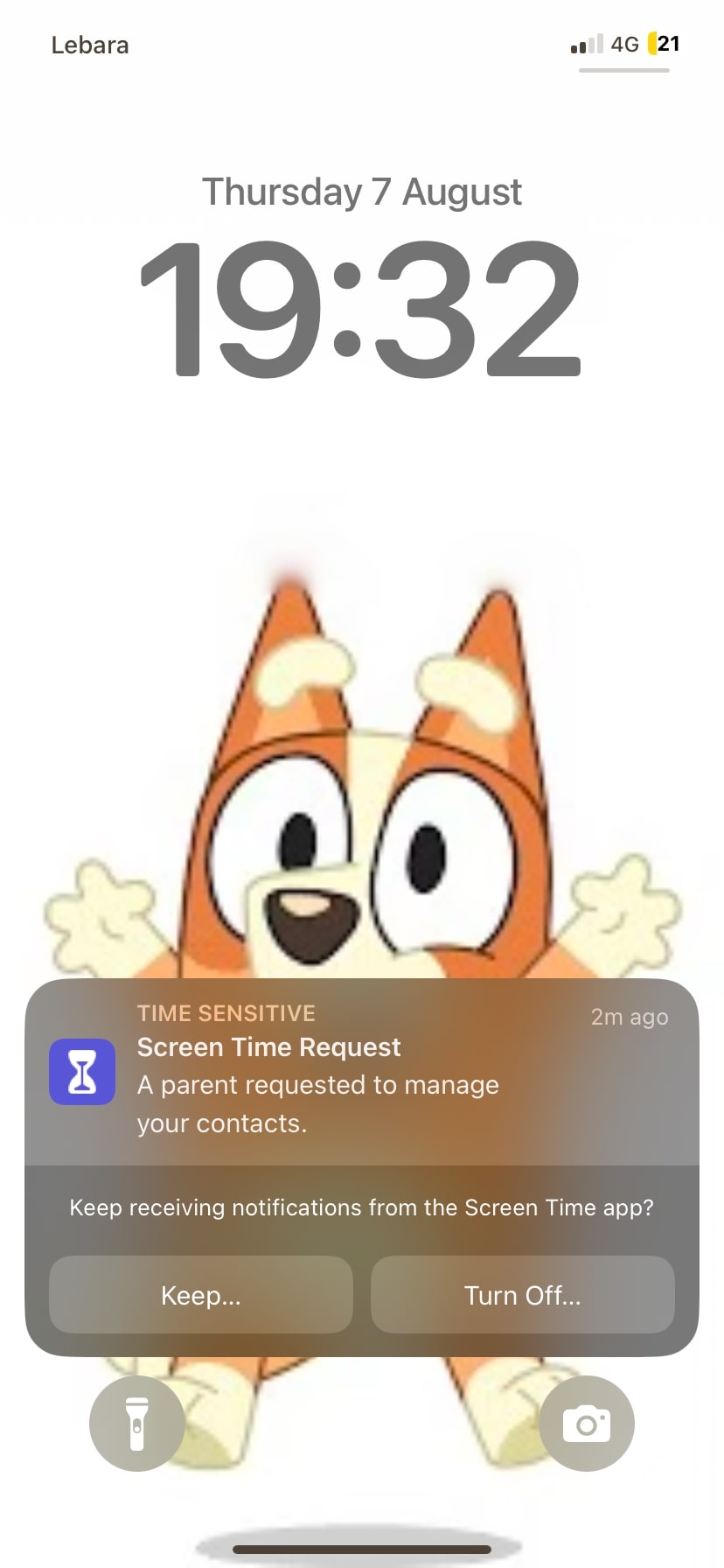
In a further shocking development, less than 24 hours after the police released me, whoever had access to my phone tried to use it to hack into my daughter’s phone using Apple’s parental access feature (see screenshot below).
Why does this matter?
This is the first time powers of this nature have been used in this way to target and access a solicitor’s confidential client data.
If left unchallenged, it sets a dangerous precedent:
We cannot allow the state to intimidate lawyers who take on clients they do not like, or who hold political views they disagree with, especially those related to Palestine.
If the state can detain a solicitor and raid his or her privileged client data under the guise of counter-terrorism, it undermines the sanctity of lawyer-client communications and the rule of law.
Clients will feel unable to trust the legal process, engage in it, or challenge State abuse through the courts and share important material with their lawyers in sensitive national security cases.
How can you support?
I cannot fight this battle alone. With your help, we can set a precedent that protects every person’s right to confidential legal advice.
This is not just about me. It is about defending the rights of members of the public to be able to speak with their lawyers in confidence without state interference.
It is about protecting lawyers who act on important cases related to national security against state intimidation.
Please donate whatever you can and share this page across all your social media platforms.
My lawyers have agreed to act for me under a conditional fee agreement so the funds raised will only be used to cover any disbursements (like court fees or expert witness fees), any costs I am ordered to pay if I am unsuccessful in this claim, and in any onward appeal.
As ever, I am very grateful for your support.
Fahad Ansari
July 31, 2026
A Major Victory: The Court of Appeal Will Hear My Case
The Court of Appeal has granted me permission to appeal on one of the most important issues in my case: whether I have the right to know why the police detained me.
You may remember that, at the very last minute in May, my trial was stopped so that the Court of Appeal could consider this issue. It has now accepted that the question is so important that it needs to give guidance that will shape the law going forward.
This has become a genuine test case.
It is no longer simply about me, my phone, or even the confidentiality of lawyer-client communications. It is about the rights of every person entering or leaving the UK.
Schedule 7 of the Terrorism Act allows people to be stopped, questioned, detained and have their electronic devices seized without any suspicion whatsoever. The Court of Appeal will now decide whether, in those circumstances, a person is entitled to know the reasons for this level of state intrusion into their lives. It will also consider the wider implications of the police's power to seize and download the contents of someone's phone simply because they are crossing the UK border.
These are questions that go to the heart of fairness, accountability and the rule of law.
There will now be a one-day hearing before the Court of Appeal. Only after that will the trial resume in the High Court. I hope that, by then, I will finally know the reasons the police say justified detaining me, so that I can properly defend myself.
I could not have reached this point without you. Your generosity, encouragement and belief in this case have made every step possible. Together, we have taken an issue that many thought would never be heard and put it before the Court of Appeal.
The next stage will not be easy. The Home Office and the police, backed by substantial public resources and teams of lawyers, will fight this appeal every step of the way. The costs of taking on the state continue to grow.
If you are able to help, please consider donating. If you cannot donate, sharing this page with friends, colleagues and on social media is every bit as important.
This case could define the rights of everyone stopped under Schedule 7 for years to come. We've come this far together. With your continued support, we can see it through.
Fahad Ansari
May 8, 2026
The Police Identified me as a Hamas Member
Fahad Ansari
May 5, 2026
Court of Appeal intervenes to allow challenge on disclosure and secret evidence
Today, in a significant intervention, the Court of Appeal has ordered an immediate pause to my judicial review while it decides whether the law demands that the police must provide further disclosure about the case against me.
Previously, the High Court allowed the police to rely on secret evidence. In situations like this, it’s normally expected that at least a summary of the allegations is shared to allow a semblance of a fair hearing. However, in March, a single judge in the High Court ruled that neither I - nor anyone detained under exceptionally intrusive powers under Schedule 7 - was entitled even to a basic summary of the allegations against them.
As such, I was due to go to trial this week without knowing the case against me.
With immense thanks to the relentless work of my legal team, the Court of Appeal has now recognised that our argument for disclosure has merit and should be decided before my trial. As a result, this week’s trial has been adjourned while the court gives further consideration to these important disclosure issues.
There is a clear inconsistency here: those who comply with Schedule 7 appear to have fewer rights than those who refuse and are later prosecuted, who can see and challenge the evidence against them.
This development also follows disclosure of a police risk assessment form completed by the detective inspector who authorised my detention. On that form, “Hamas” was recorded under “membership of a known group.” The police have since claimed this was an error, saying they meant “solicitor for Hamas.” This lack of distinction itself raises serious concerns about how legal representation is being characterised.
You can read more about this in the Guardian's coverage here.
As an Irish solicitor, seeing this in writing is deeply troubling. It echoes a dark time when the British state targeted lawyers for representing members of another proscribed group. This is not Belfast in the 1980s when such messages were delivered with bullets, but the intention feels uncomfortably familiar: represent certain clients and face consequences. By trying to intimidate lawyers like me, the British state is effectively seeking to strip my clients of their voice in court.
If this is what has been disclosed, it raises an obvious question: what remains hidden?
I’m incredibly grateful to my legal team for their determination in preventing this case from proceeding under such unfair conditions. And thank you to everyone who continues to support me. Your solidarity truly matters.
We will keep pushing for transparency, fairness, and repeal of Schedule 7 powers, which currently allow detention, interrogation, and seizure and download of devices - all without suspicion.
This is bigger than my case. If the state can rely on secret evidence and target lawyers without consequence, then no one’s rights are secure. Do not allow your silence to be taken as acquiescence - share this, speak out and expose what is being done behind closed doors.
Fahad Ansari
April 27, 2026
UN Special Rapporteurs demand answers from UK over my harassment
Ahead of my hearing next week, a team of 5 UN Special Rapporteurs has written to the British government over its "harassment, intimidation, and misuse of counter-terrorism powers" against me in “apparent retaliation for carrying out [my] lawful professional functions as a lawyer.”
These measures included "politicised vilification, regulatory pressure, detention under schedule 7 of the Terrorism Act 2000, and the seizure and downloading of a work device containing legally privileged material."
"...we are concerned that such measures threaten to criminalize, stigmatize and have chilling effects against lawyers and legal associations carrying out lawful work in national security and counter-terrorism matters, including with respect to the human rights compliance of proscription regimes, including the right of proscribed entities to seek delisting."
The letter’s signatories are the UN special rapporteurs on
- the promotion and protection of human rights and fundamental freedoms while countering terrorism;
- promotion and protection of the right to freedom of opinion and expression;
- rights to freedom of peaceful assembly and of association;
- independence of judges and lawyers; and
- right to privacy.
The full letter can be read here and in addition to the concerns about the use of Schedule 7 against me, the Special Rapporteurs express concern about
- the authorities failing to adequately protect me against threats and doxxing
- the possibility of data seized from my phone being shared with domestic and foreign intelligence agencies
- senior politicians exercising improper influence on regulatory bodies and law enforcement
- SRA investigations into me being based on vexatious complaints and functioning to intimidate me as a lawyer
- all of this repression deterring lawyers from representing certain clients
The Law Society Gazette has reported on the letter here.
Thank you for your continuing support.
Fahad Ansari
March 25, 2026
We have Applied to Appeal the High Court’s Secret Evidence Decision
We have today applied for permission to appeal the High Court’s decision refusing to order the police to provide even a basic summary (“gist”) of the reasons for my detention last year.
Earlier this month, the High Court ruled that the usual safeguard in cases involving Closed Material Procedures (often called “secret evidence”) does not apply to Schedule 7 stops. In effect, this means the police are not required to provide even the irreducible minimum of the allegations against me, leaving me unable to meaningfully respond.
The Court relied on a Supreme Court decision concerning search warrants issued under the Police and Criminal Evidence Act (PACE), where it was held that the State did not need to disclose a summary of the reasons when relying on secret evidence. The Court treated that situation as comparable to a Schedule 7 stop involving detention and the seizure of a phone.
But this is a deeply flawed comparison.
- Search warrants under PACE require reasonable suspicion and prior judicial approval. By contrast, Schedule 7 powers are exercised without any judicial authorisation, amounting to an executive power used without independent scrutiny.
- PACE warrants are also tightly limited to what a judge authorises in advance. Schedule 7 powers, however, are effectively open-ended,especially regarding electronic data, with no clear threshold or constraints.
- The courts have repeatedly recognised how intrusive it is to search modern electronic devices, given how much of our lives they contain. Schedule 7 allows for extensive examination and retention of that data, making the interference with individual rights significantly more serious.
- Under PACE, the police cannot force someone to disclose passwords or PINs. Any such coercive power requires separate authorisation under a different legal framework, with strict judicial controls. Under Schedule 7, however, individuals can be compelled on the spot to hand over passwords under threat of arrest, again, without judicial oversight.
- PACE also provides important protections for legally privileged material, including transparency and the ability to challenge decisions before a court. Schedule 7 offers no equivalent safeguards, increasing the risk of unjustified intrusion.
This creates a troubling outcome: someone who complies with a Schedule 7 stop has fewer protections than someone who refuses and is later prosecuted. In the latter case, they would benefit from full disclosure rights and the opportunity to challenge the lawfulness of the stop and cross-examine officers in open court.
The High Court’s approach risks encouraging non-compliance at UK borders.
If the High Court refuses permission to appeal, we will take this fight directly to the Court of Appeal. This is an important issue of principle, with wide implications for civil liberties.
I am deeply grateful for your continued support. None of this would be possible without it.
Fahad Ansari
Jan. 22, 2026
Court Update: Why Disclosure Matters
We were at the High Court yesterday seeking further disclosure from the police about the reasons for their stopping me.
The hearing focused on a single but fundamental issue: whether the police must disclose enough of the allegation against me to allow me to properly respond to it — not merely deny it.
This safeguard is known as AF(3) disclosure. It exists to help protect our Article 6 right to a fair trial in cases where the State relies on a Closed Material Procedure ('CMP') or 'secret evidence', as it is doing in this case. Where it applies, the position is clear: the State must either make ther disclosure — even if it claims national security concerns — or else be prevented from relying on it at all.
The police argued that AF(3) does not apply to Schedule 7 stops. Their position was that:
the harm is not ongoing;
the interference with rights is not serious enough (they said it must be comparable to imprisonment or control orders); and
even if it were serious, disclosure would make no difference because nothing I could say now could undermine the lawfulness of the original decision to stop me — especially as Schedule 7 requires no suspicion.
We strongly challenged this.
First, we argued that the harm is ongoing. My data remains in police possession and continues to be processed. The Judge was clearly troubled by the suggestion that the state could seize someone’s data, search it, and retain it even after learning an innocent explanation for the alleged concern.
Second, we emphasised that as the interference is with legal professional privilege ('LPP'), it is significant. LPP is an absolute right and impacts not just me and my clients but the wider public whose faith in the rule of law would be undermined knowing that they are unable to privately communicate with their lawyer without the State having access to it.
We further argued that the interference with any phone in today's age is more intrusive than a search of one's home with Judge Chamberlain noting that people today have their whole life on their phones.
Third, we made a simple point of principle: you cannot meaningfully answer an allegation unless you are told what it is.
The Judge has reserved his decision. The closed hearing was not completed and will continue next week.
It is also important to be transparent about costs. The police have now instructed a King’s Counsel in addition to junior counsel, underlining both the seriousness of this case and the resources being deployed to defend their powers under Schedule 7.
This case is not only about what happened to me. It is about whether the state can secretly seize phones at the border, retain personal and legally privileged data, and refuse to explain itself — even where fundamental rights are engaged.
If you are able to contribute, your support is crucial. Donations allow us to continue challenging these powers and to see this case through to its conclusion.
Thank you, as always, for your solidarity and support.
Fahad Ansari
Oct. 27, 2025
We are urgently applying to the Court of Appeal to protect legal privilege
On Friday 24 October, the High Court refused the Home Office’s attempt to strike out my case, and has now listed it for a full two-day hearing in May 2026.
This is a huge step forward — the case will finally be heard in full.
However, the judge refused to grant me interim relief — meaning the police are still allowed to access and share the data on my phone in the meantime.
That decision was made on the basis of secret evidence — material that neither I nor my lawyers have been allowed to see.
The court accepted the police’s claim that a barrister appointed by them will first “sift” through my phone to ensure that legally privileged material (communications with clients, case files, witness names, etc.) isn’t disclosed to the police. If such material is accidentally passed on, the police say they will delete it and not rely on it.
But this process is deeply flawed — and dangerous:
- The barrister has no idea who my clients are, what cases I’m working on, or how sensitive this material is. Without my input, they cannot possibly know what is privileged.
- If I try to help by identifying this information, I would breach client confidentiality and hand even more intelligence to the police and security services.
- The police say they will delete any privileged material that slips through — but since I won’t be told what they’ve seen or used, there is no way to verify or challenge it.
To make matters worse, the police refuse to disclose any details of how this secret “sifting” process works, claiming even releasing this information would endanger national security.
This is not just about my phone — it is about the integrity of lawyer-client privilege, one of the cornerstones of our legal system.
The highest court in Britain has made it clear: the right to legal privilege is absolute. It cannot be balanced against “national security” or any other state interest.
We are now taking this fight to the Court of Appeal, asking it to uphold that fundamental principle — that no one, not even the police, is above the law.
This next stage will significantly increase legal costs, and I urgently need your support to continue this challenge.
Your generosity has already brought us this far — please stand with me once again to defend the rule of law and protect the right of every client to speak to their lawyer in confidence.
Please donate, share the link, and spread the word.
The case is beginning to attract wider media attention — links below.
The Canary: Fahad Ansari ruling shatters legal privilege — and every lawyer should be alarmed
Law Society Gazette: LPP no 'cast iron defence’ for solicitors' phones being searched, say police
Press TV: Muslim human rights lawyer, Fahad Ansari, is suing the UK government
5 Pillars: Pro-Palestine lawyer Fahad Ansari faces ongoing pressure from British state
Fahad Ansari
Oct. 23, 2025
We are back in Court today
My legal battle against the police and Home Office continues today (23 October) at the High Court when the police will push for a secret hearing where neither me nor my lawyers will be allowed to see the 'evidence' presented!
I am refusing to engage with this process due to it violating basic fairness principles and will be requesting the Court today to
1. Refuse the application for there to be a Closed Material Procedure ('secret hearing')
2. Grant me permission to have a full judicial review hearing
3. Grant an Order prohibiting the contents of my phone being examined or shared with anyone pending judgment in my claim.
A solidarity protest has been organised by CAGE International others outside the High Court in London from 9:30 AM and is likely to continue until 5pm. Please do try to come down if possible.
Thank you for all your continuing support.
Fahad
Fahad Ansari
Oct. 7, 2025
Police want to rely on Secret Evidence against me
Today at the High Court, we we applied for the judge to grant an order prohibiting anyone from accessing the contents of my phone until the court could decide the lawfulness of the police's actions in detaining me and seizing my phone.
The judge was reluctant to do so without understanding the police's reasons for detaining me and taking my work phone. The police however repeatedly refused to give that reason. They argued they did not ever need to justify a schedule 7 stop. We argued this was absurd as both the common law and human rights law required an interference with someone’s liberty to be justified. The judge agreed with us. The judge has now required the police to provide reasons for the stop.
There was a bizarre moment however where the police appeared to draw a distinction to the judge between ordinary solicitors and solicitors who acted for proscribed organisations, and in the latter case, that interference with their rights was more readily justified. When the judge pointed out to the police the contradiction between this and their written case that my clients had no role to play in the decision to stop me, the police swiflty recanted.
The judge ultimately adjourned the hearing on interim relief and instead directed the Police and Home Secretary to make an application under section 6 of the Criminal Justice Act to be permitted to rely on a Closed Material Procedure (CMP) if they needed to in order to provide the reason I was stopped. This will essentially involve them asking to rely on secret evidence that neither my lawyers nor I will ever see, but the judge will make a decision on interim relief after seeing this material.
The judge also refused to prevent the police-appointed barrister to begin reviewing my phone to determine what contents are privileged and what are not. Despite the police sitting on the material for two months, the judge accepted the police posiiton that there was an urgency surrounding accessing the contents on my phone due to general assertions of national security. However the judge agreed no material should be provided to the police by the barrister until this application for interim relief has been resolved.
We are back in the High Court on 23 October albeit my lawyers and I will be removed from the court at some point so everyone else can discuss the secret material the police are relying on.
Thank you to each and every one of you who came to support me at court today and packed out the public gallery.
You can read more details about what happened at the hearing in this report by Computer Weekly
Fahad Ansari
Oct. 2, 2025
We've got our first day in court
Thanks to your incredible support, my case is moving forward.
On Monday 6 October at 10:30am, my legal team will be at the High Court in London asking the judge for a temporary order — to stop the police (and anyone else) from looking through my phone until the full case is decided. This type of order is called interim relief.
Why does it matter? Because without this protection, the police could access all the sensitive information on my phone straight away — meaning that even if I later win the case, the damage would already be done. The police have told the Court that nobody has yet examined the contents of my phone.
This first hearing is an important step, and it’s open to the public if you’d like to attend.
Thank you again for standing with me — your support is what makes this possible.
Date: Monday 6 October, 10:30am
Venue: Royal Courts of Justice, Strand, WC2A 2LL
Fahad Ansari
Sept. 23, 2025
We discussed my case at the UN Human Rights Council in Geneva
On 22 September 2025, I spoke at a side panel meeting at the UN Human Rights Council in Geneva about the attacks on lawyers in Britain.
I was invited by the Islamic Human Rights Commission to speak about the experiences of lawyers who have been the subject of attacks and targeted regulatory complaints and harassment on account of their speaking out against the genocide of Palestinians. I mentioned the cases of Franck Magennis and Ousman Noor as well as my own detention by the police.
I also had a private meeting with the office of the Special Rapporteur on Independence of Judges and Lawyers where we discussed these matters at significant length.
Over the past few days, I have received hundreds and hundreds of messages of support from all over the world and want to thank each and every one of you brave and beautiful people. Together, we are on the cusp of reaching our first target.
Your kindness and solidarity make it possible not only to challenge the police and Home Secretary over their actions, but to defend the principle that our private, sensitive communications must remain protected.
This is more than my fight — it is ours, and it is about safeguarding the rights of all who refuse to be silenced.
We will continue to fight this draconian power that allows police to seize and download people's phones without the need for any level of suspicion of wrongdoing.
This is not just about legal privilege but about everyone's fundamental liberties and their ability to access legal protections to safeguard them.
Please continue to share the page and watch this space for updates for the first hearing in the case.
Support the case